
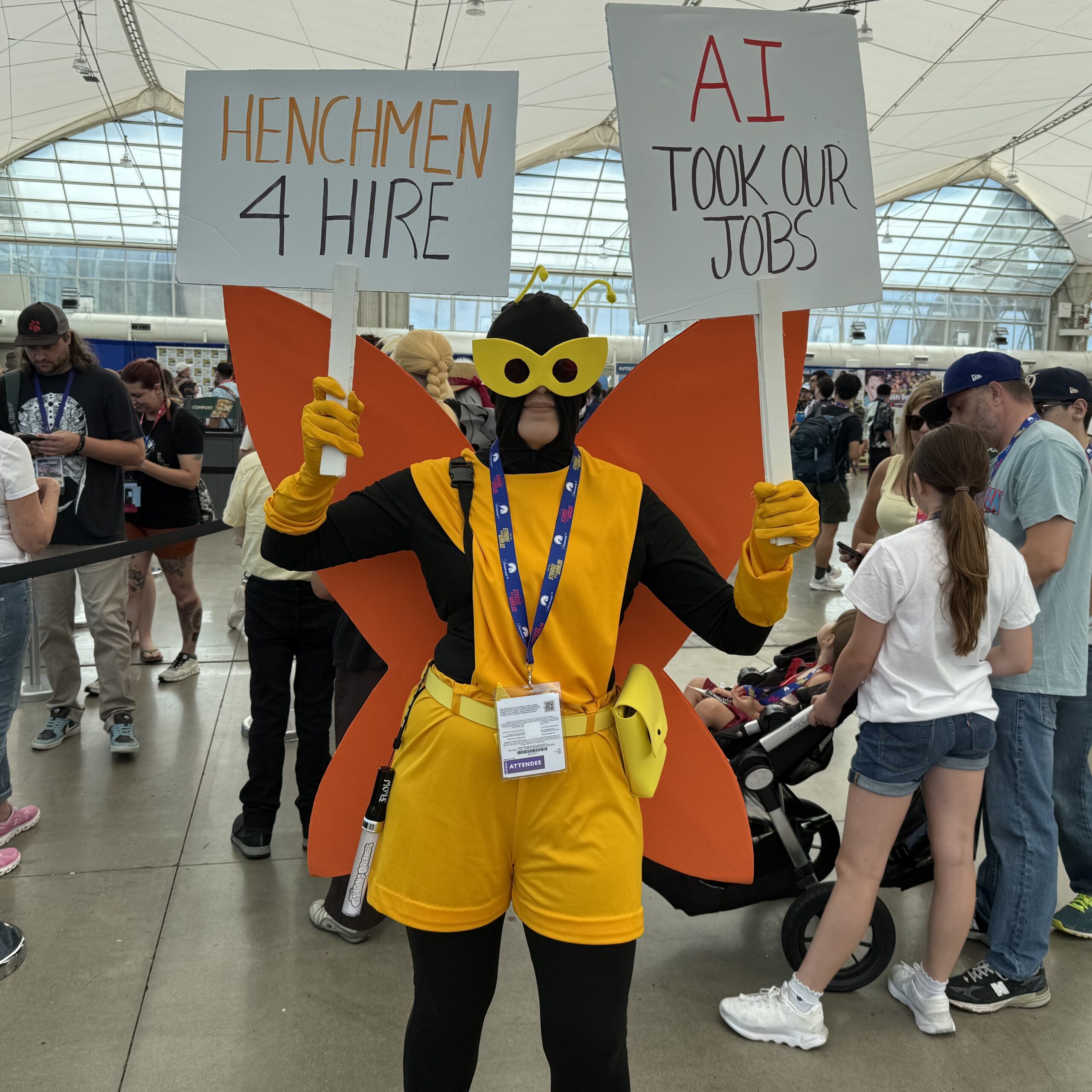
I was last at San Diego Comic-Con in 2017. For that and for previous visits, I covered the con like a journalist. I think I was trying to be of use to others, since relatively few people get to attend. In 2026, I don’t have the energy for that — indeed, I’m only getting this post up nearly a week after the con. So, instead of the more exhaustive approach of those earlier years, here’s my personal and idiosyncratic top 10 from this year’s con — in no particular order.
1. Comics vs. Authoritarianism
Since we live in a period of social collapse, being at a mass event celebrating comics and pop culture can feel dystopian. Every day, walking to Comic-Con, we passed the unhoused lying on the piss-scented streets, and saw some holding signs asking for help. The weekend before Comic-Con, I was at a regional (Kansas-Missouri) meeting of Indivisible leaders. That seemed like important work. Coming here seemed more frivolous, even irresponsible.
But here’s the thing: art can change the way we see the world. And quite a few panels — along with a few sharp Eisner-Award speeches — directly addressed our current crises.
There was a Comics vs. Authoritarianism panel, a panel devoted to trans creators, and several panels on censorship.
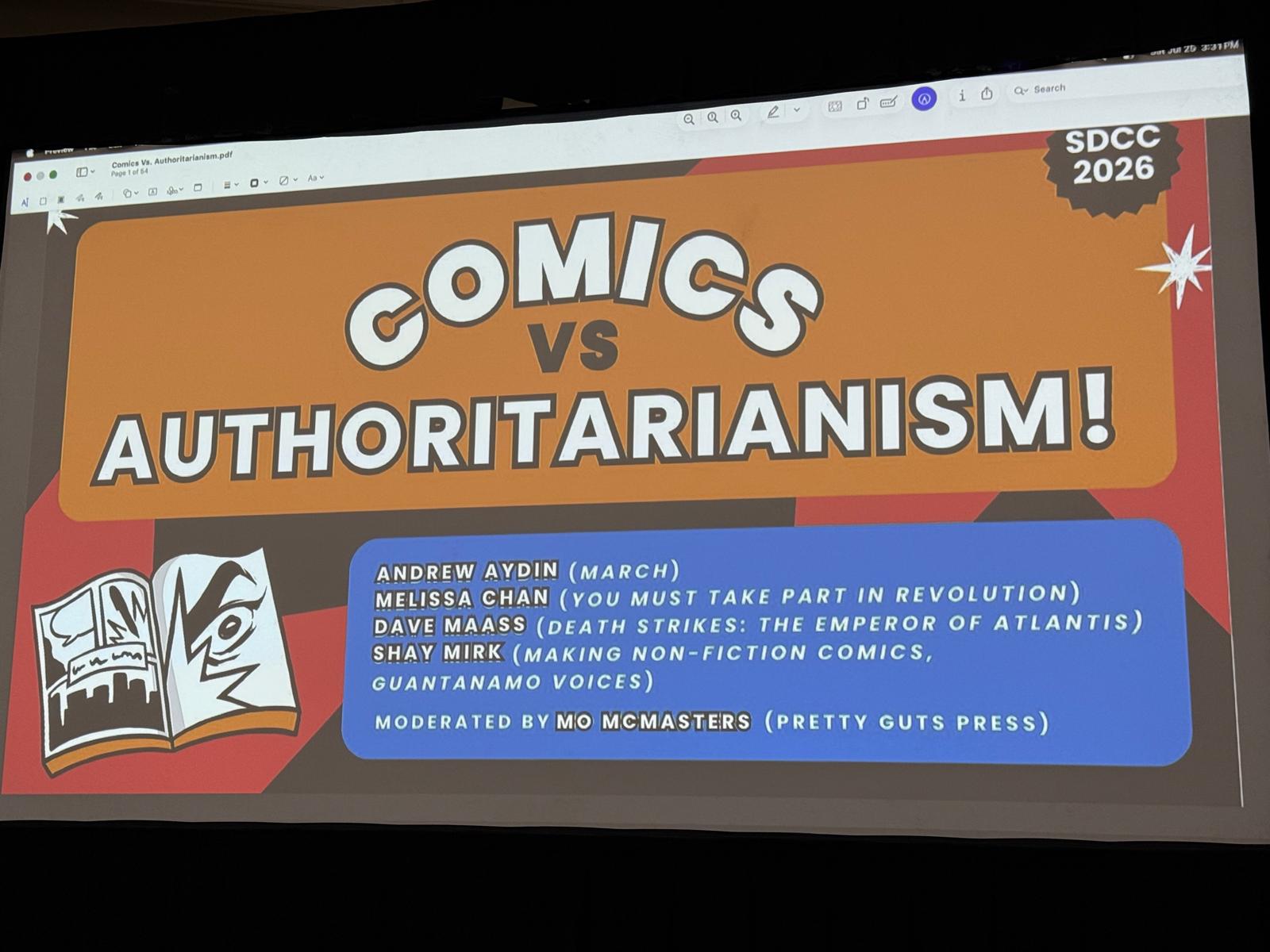
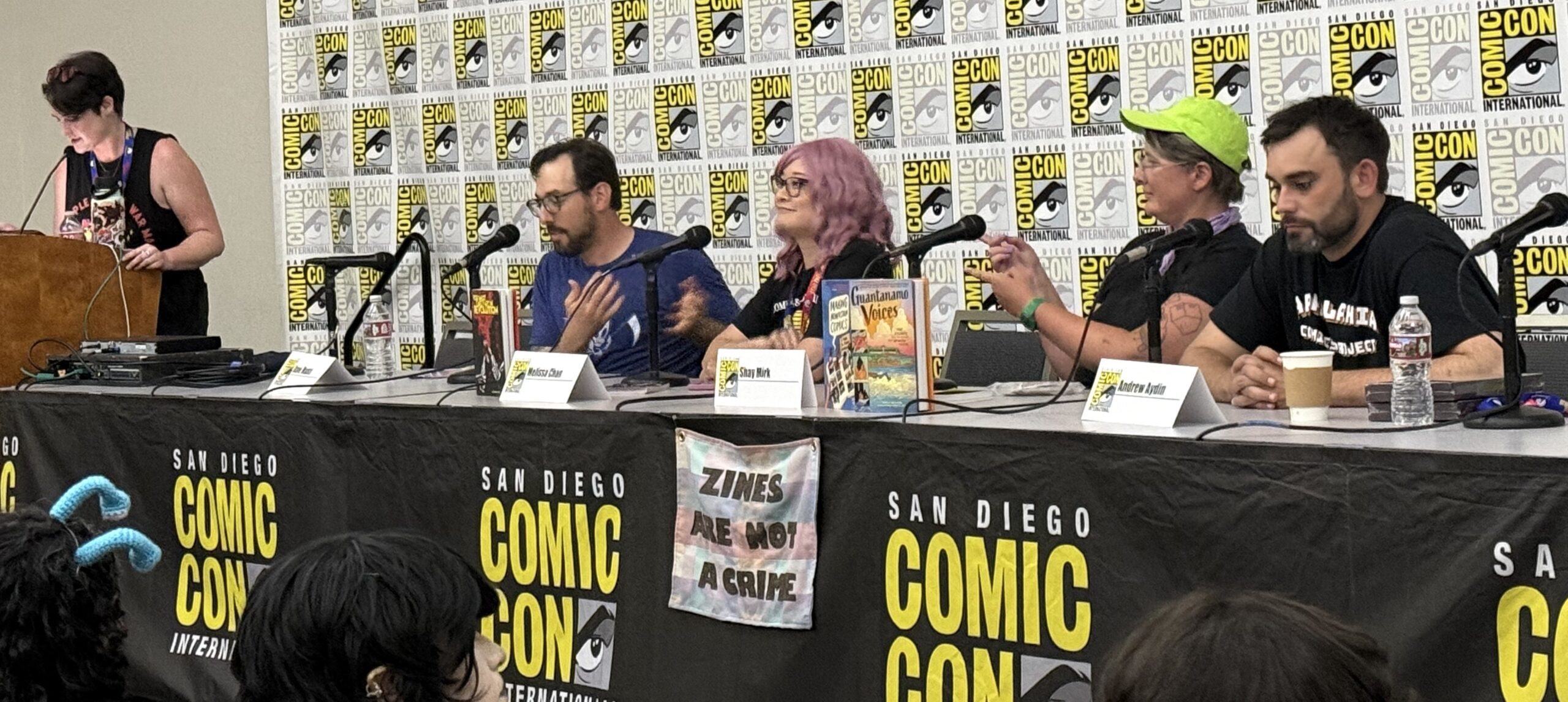
I learned a lot on this panel. On the subject of censorship Andrew Aydin (co-creator of the March trilogy) pointed out that “book bans” is something of a misnomer. The censors are finding more pernicious ways to curtail access to books — subtler, “far more insidious” means, wherein publishers are afraid to publish LGBTQIA books or books about people of color. As he put it, “They’re not going after March. They’re going after the fact that the Civil Rights Movement is being taught at all.”
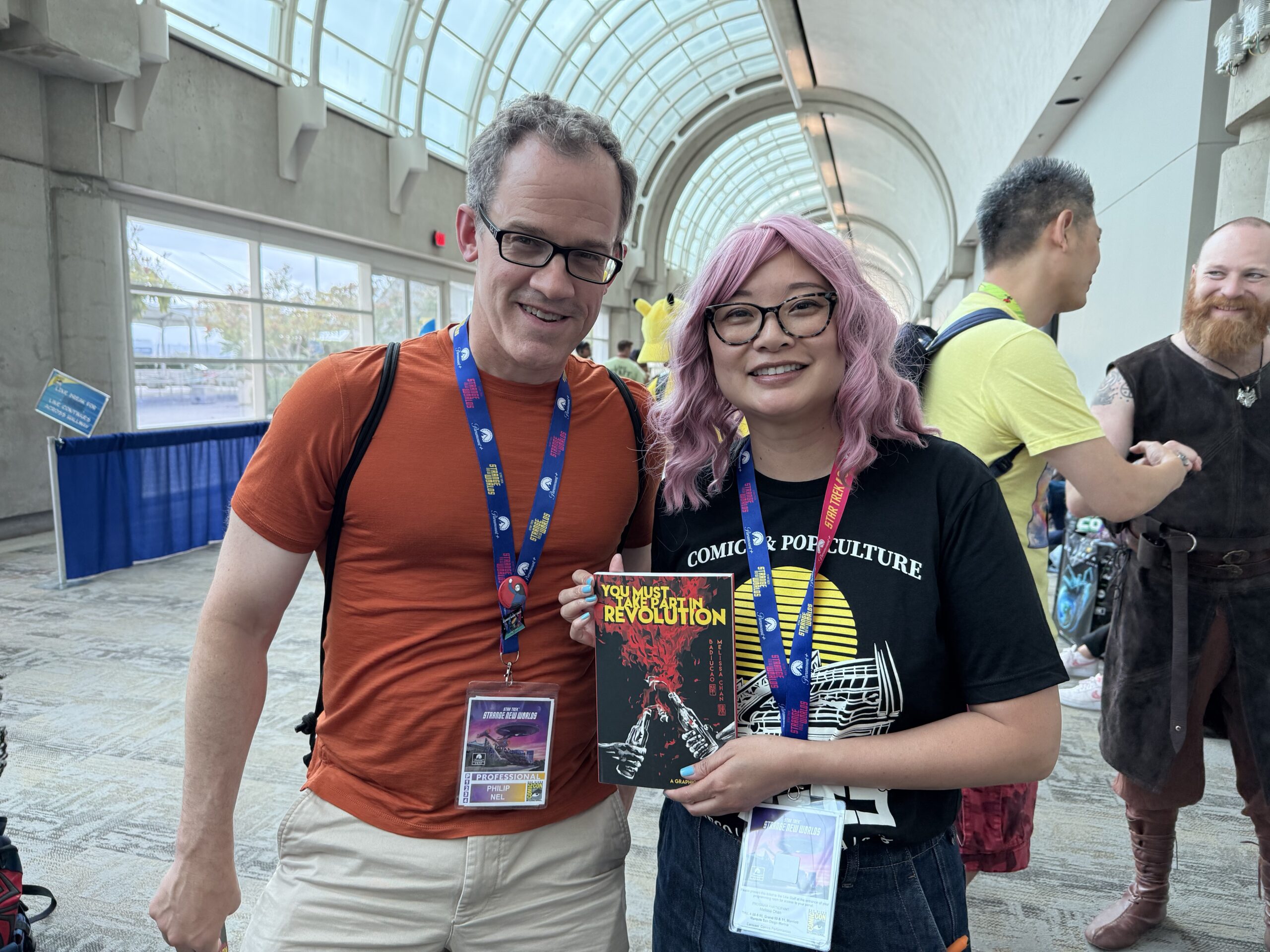
After the panel, I bought — from Melissa Chan herself — her book You Must Take Part in Revolution (2025), the art for which is by Badiucao.
2: Two great censorship panels
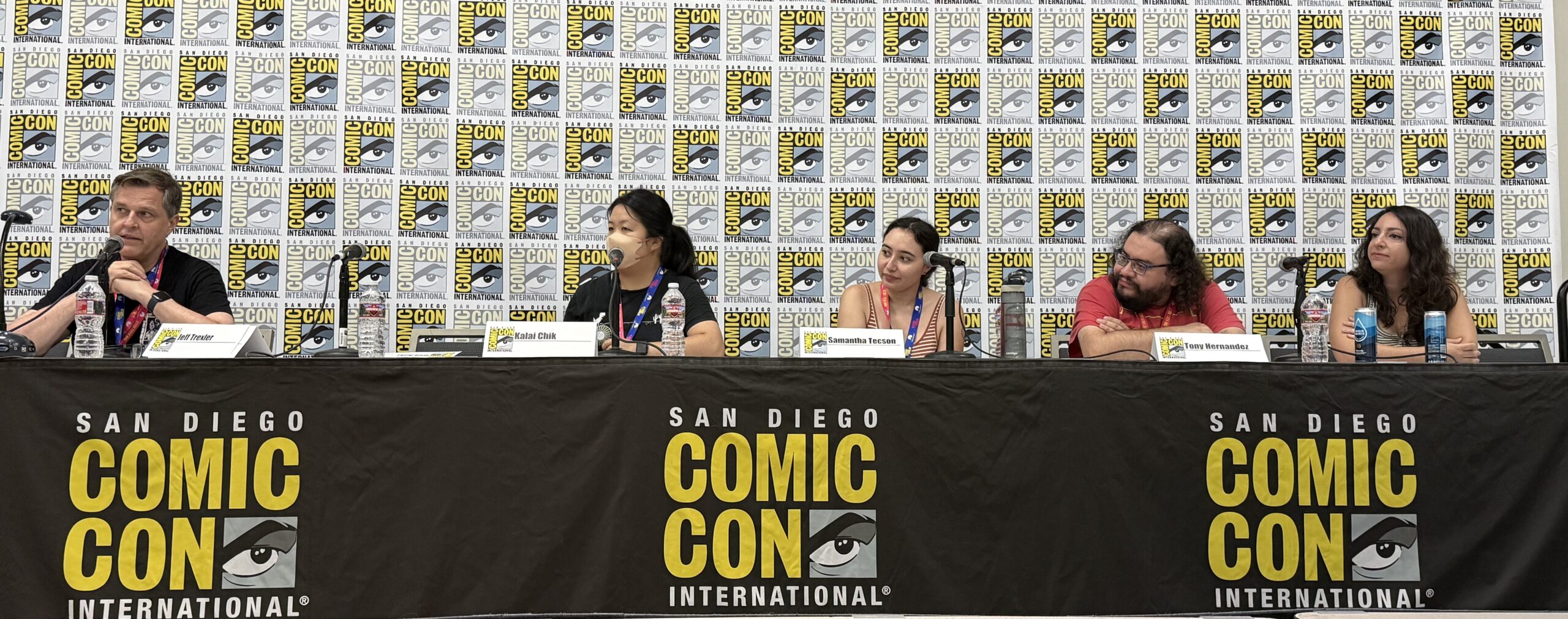
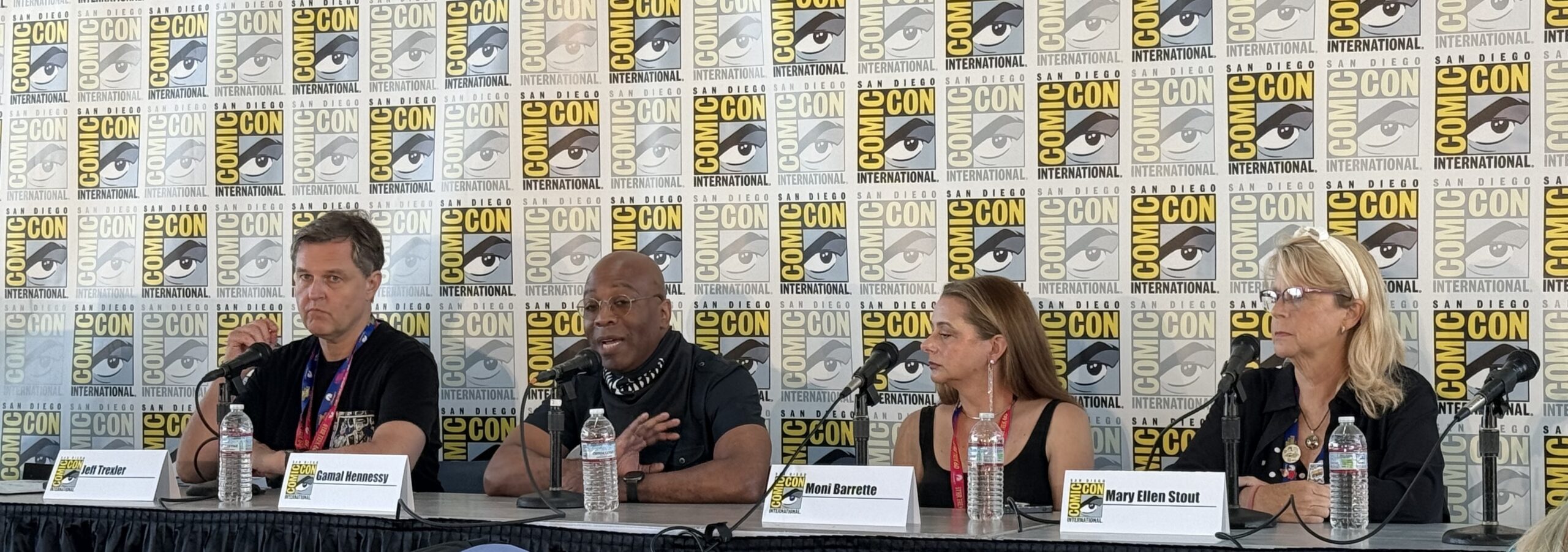
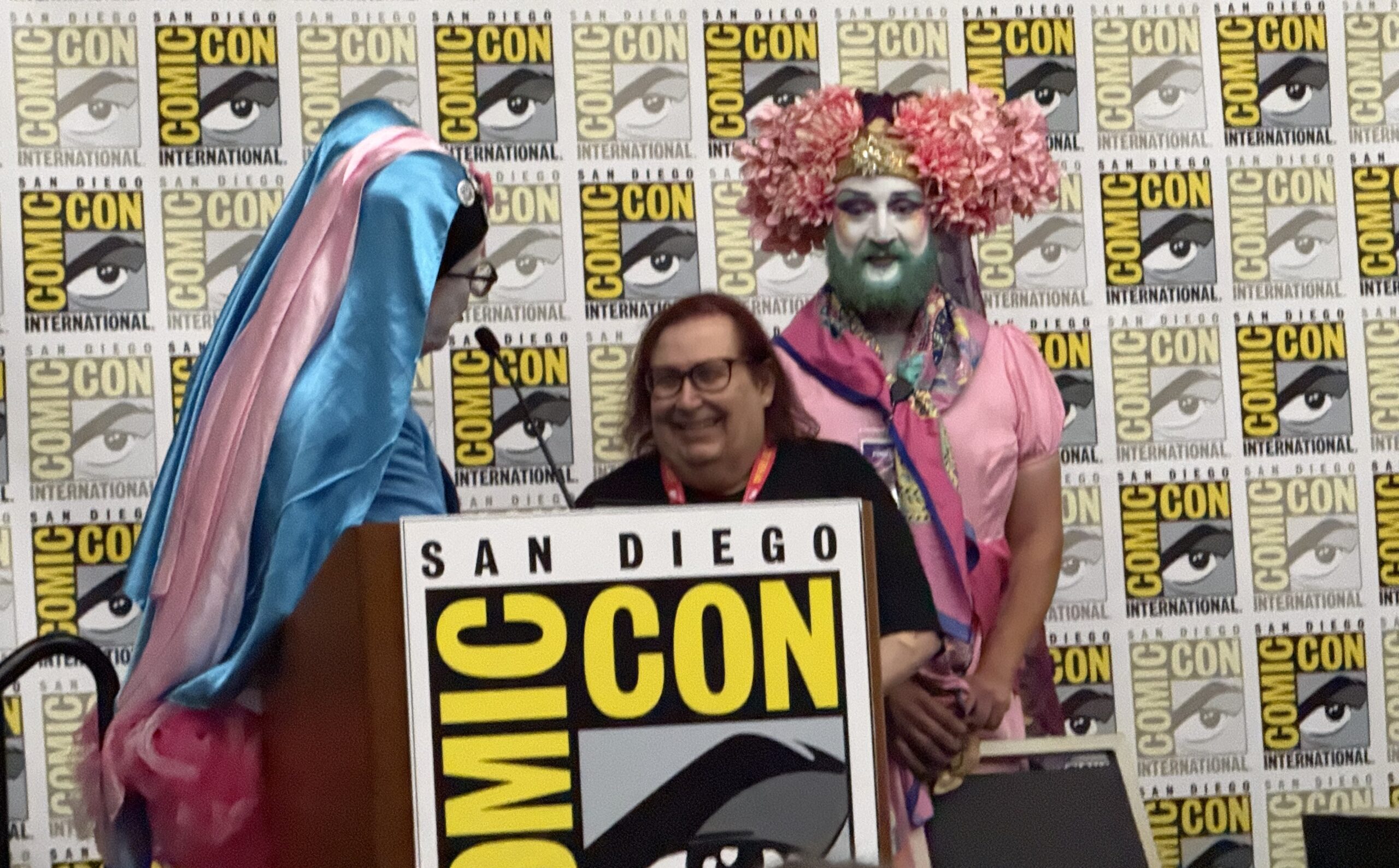
“Anime, Manga, and K-Comics Censorship” and “What Now?!: Censorship in Schools and Libraries” were both moderated by Jeff Trexler — of the Comic Book Legal Defense Fund. I chatted with him after the first panel, told him about my censorship class — where we were honored by a Zoom visit from Maia Kobabe. I then learned that he represented em at eir 2022 Virgina Beach case, successfully defending Gender Queer against an obscenity charge.
Among the important things I learned at these panels:
- Many people simply equate “manga” and “p*rn” — even though, of course, that’s not true. Indeed, the attacks on manga have become so dangerous that a lot of the CBLDF work has to be done behind the scenes, because public knowledge could put the person or company in danger.
- Take Back the Classroom is a new right-wing book-banning group, spreading the usual lies and making it far easier to file claims to remove books.
- Among the modern means of censorship I did not address in my Spring 2026 course (and will address next time!): metadata, payment, algorithms.
3: Meeting people whose work I admire!
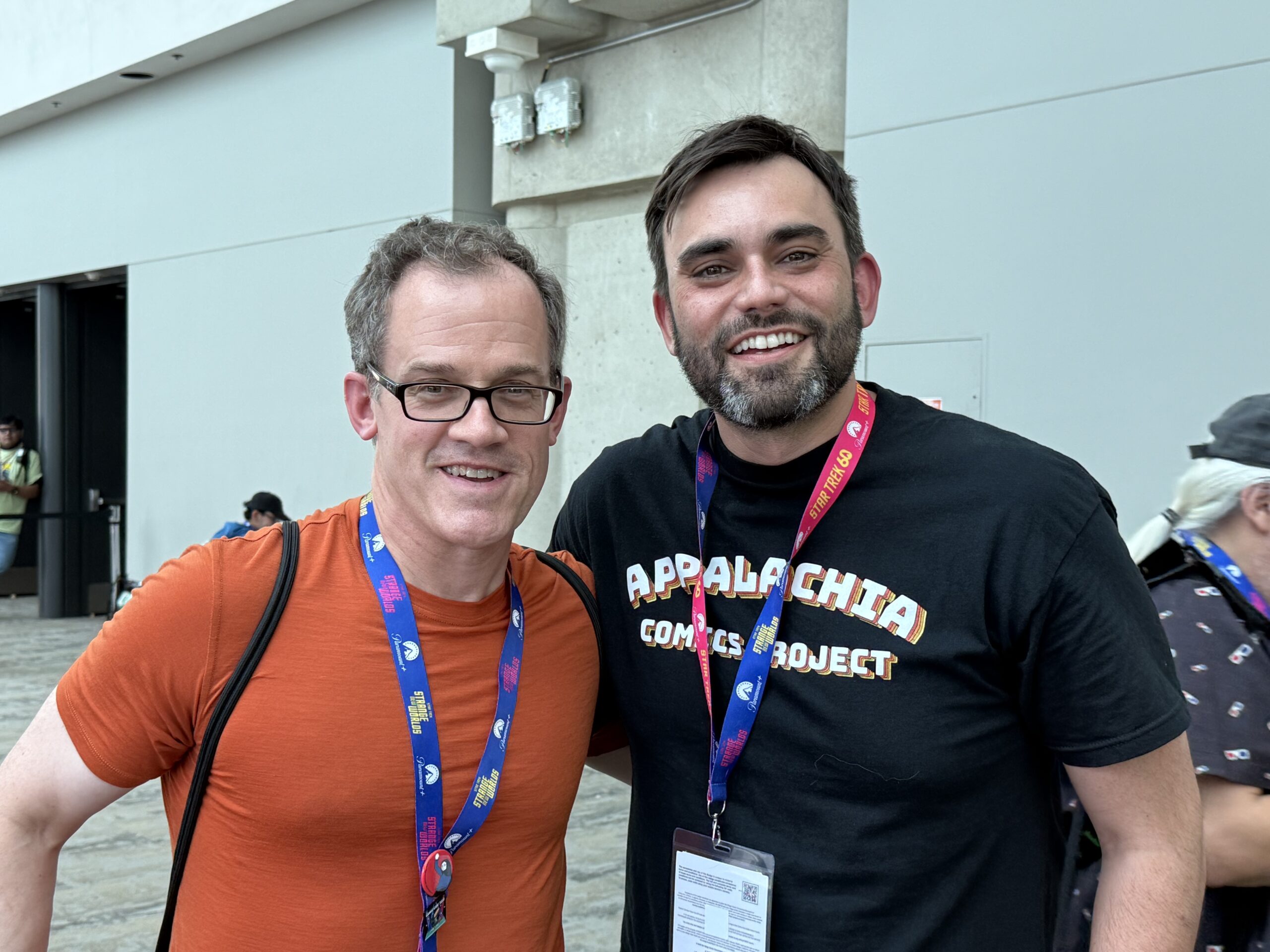
It’s fun meeting people whose work I admire — even if just in passing or for a photo. I met and very briefly chatted with Dan Santat and Raina Telgemeier. I talked with both Melissa Chan and Andrew Aydin after the “Comics vs. Authoritarianism” panel. And got photos!
Though I didn’t know her work prior to Comic-Con, I met Toril Orlesky and enjoyed chatting with her at the Eisners dinner. She’s the author of Hotblood! Vol. 1: The Land of Promise (2025). Check it out!
4: Meeting my friend Susan and her son for dinner.
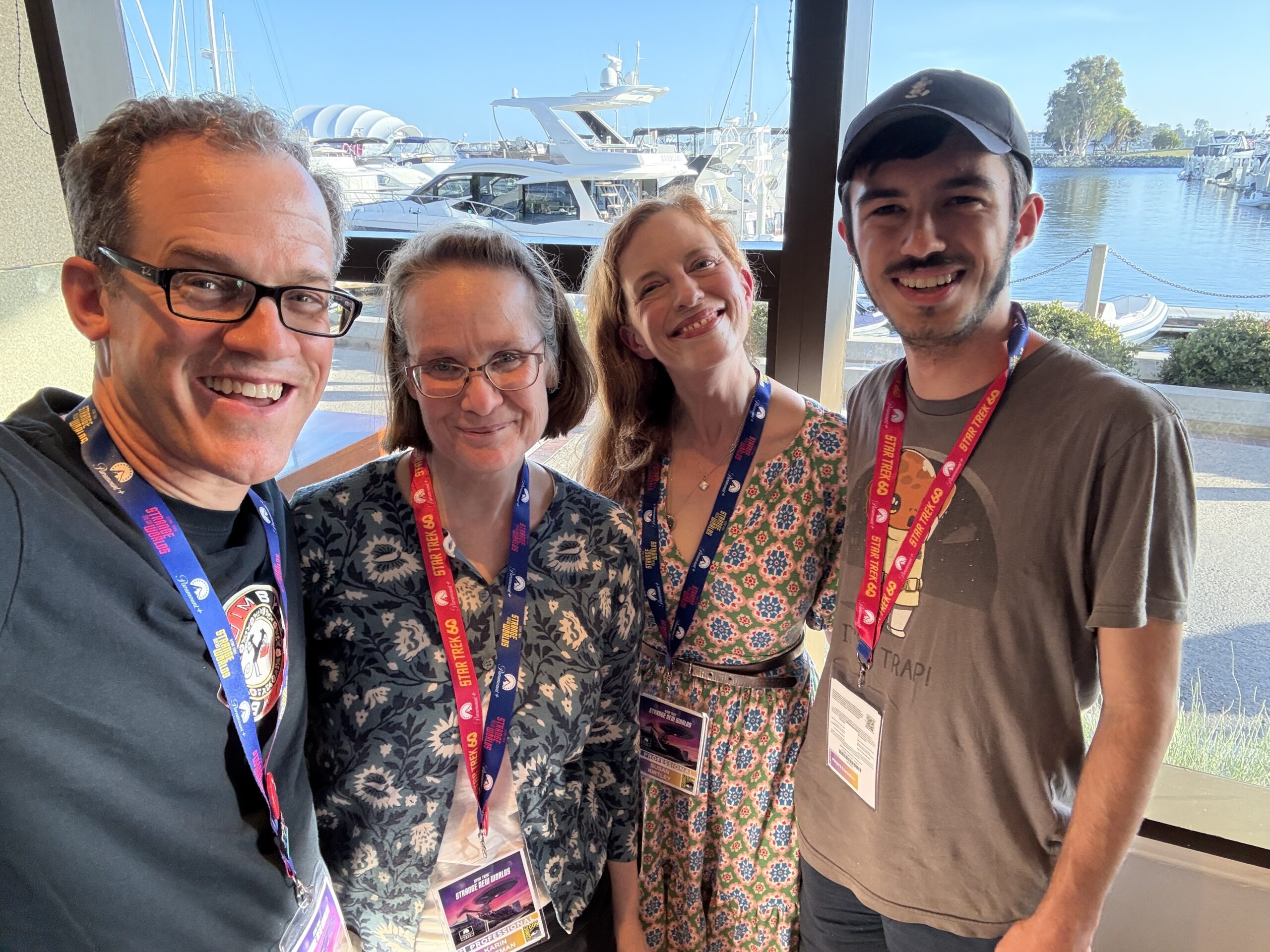
Meeting my friend Susan Kirtley and her son Leone for dinner was a highlight — for several reasons, including that I hadn’t seen Susan in a few years and that, just as my mom and I were, Susan and her son are also good friends.
5: LeUyen Pham’s portrait of us!
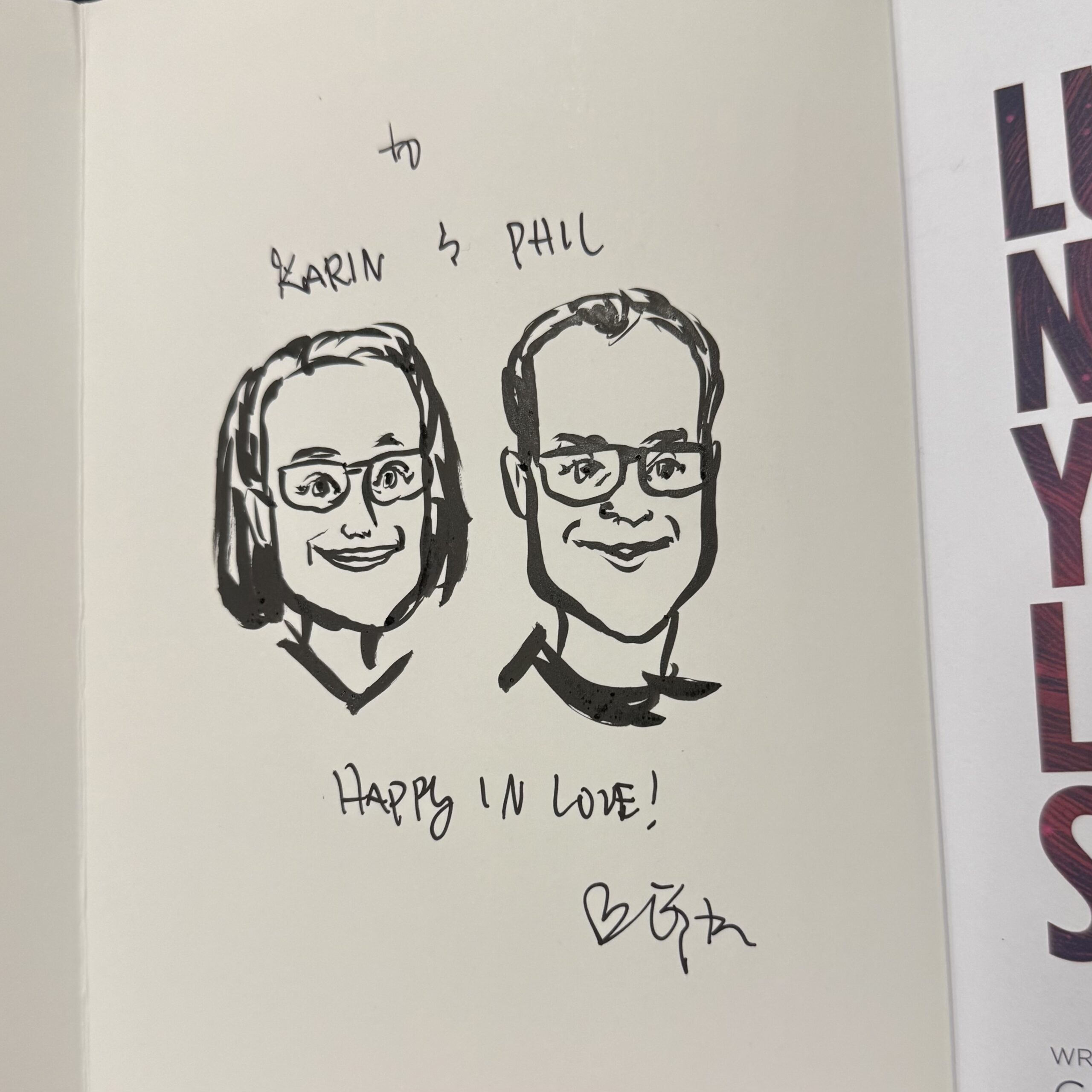
LeUyen Pham’s sketch of Karin and me opposite the title page of her Lunar New Year Love Story (2024, art by Pham, written by Gene Luen Yang) — a sketch done in minutes, while she was chatting with us, during her autograph session. To see her capture our likeness so quickly helps me understand how she’s created (drawn!) over 140 books!
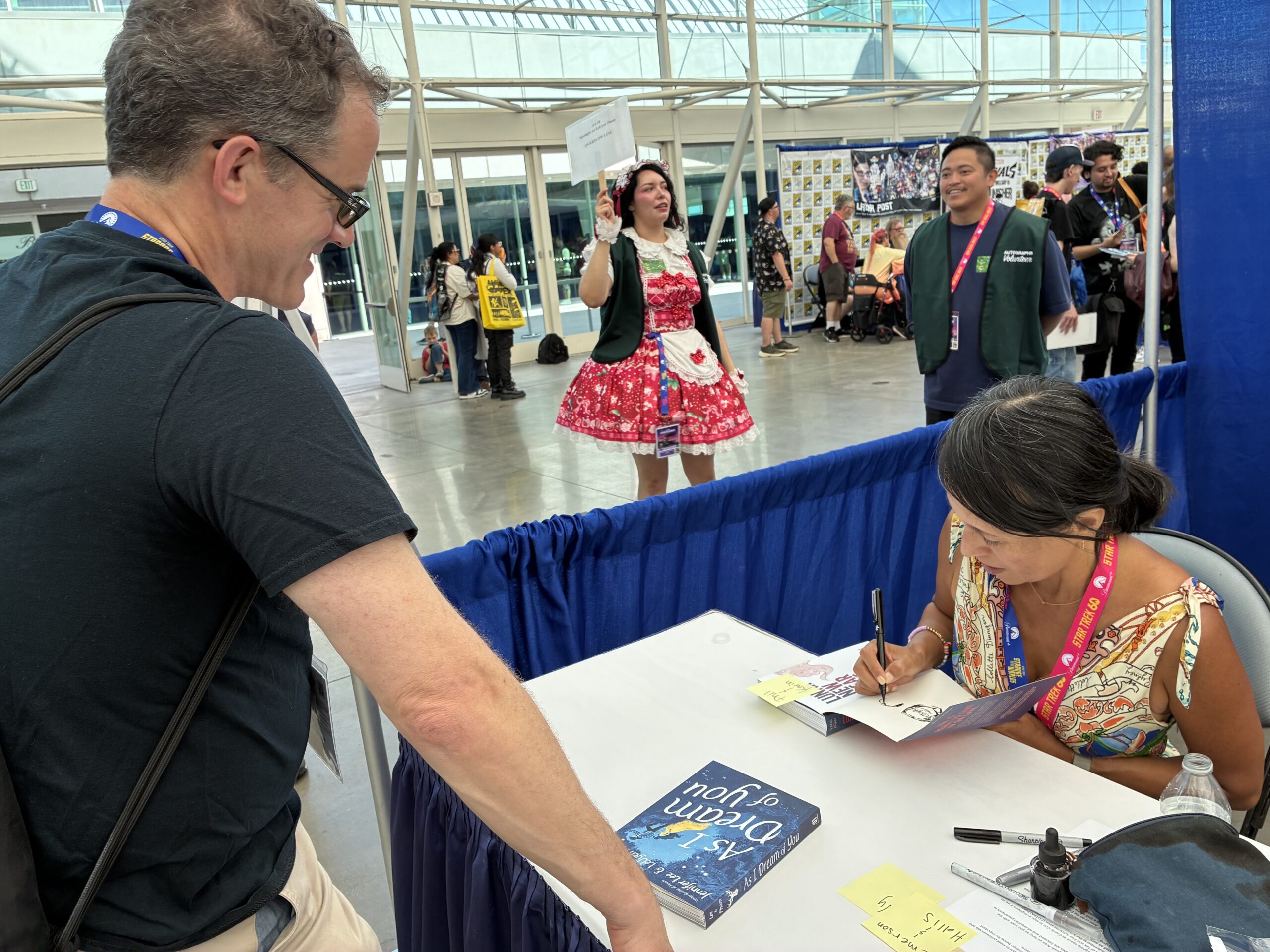
6: The creative process.
I love learning about artists’ creative processes. Here are a few things I wrote down.
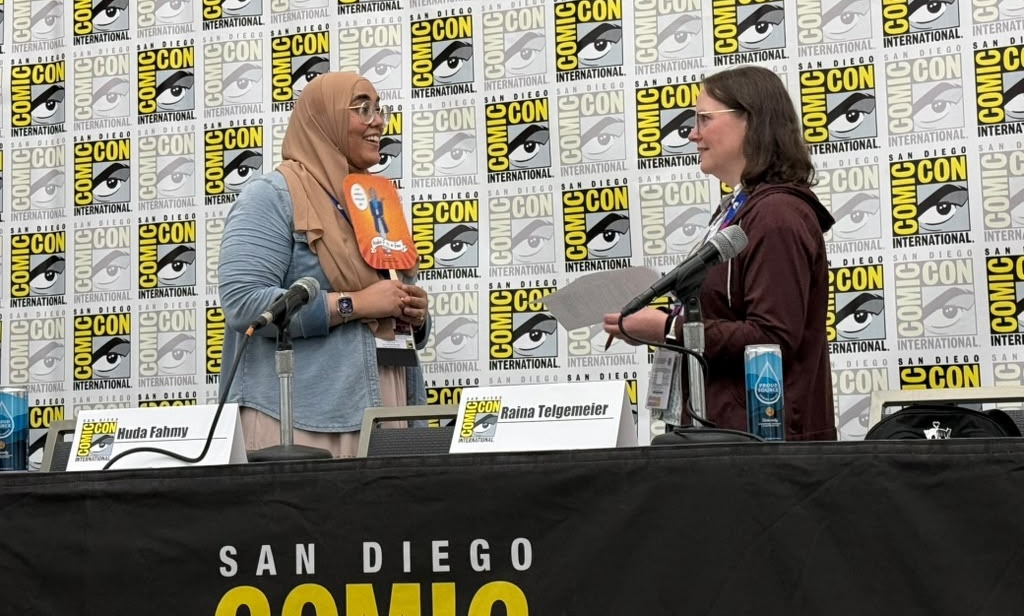
At the Huda Fahmy spotlight panel, we learned that she scripts (like a movie script) before drawing. But Raina Telgemeier (who led the conversation with Huda) creates thumbnails first. She can’t separate words and images. “I’m a really visual writer,” Raina said.
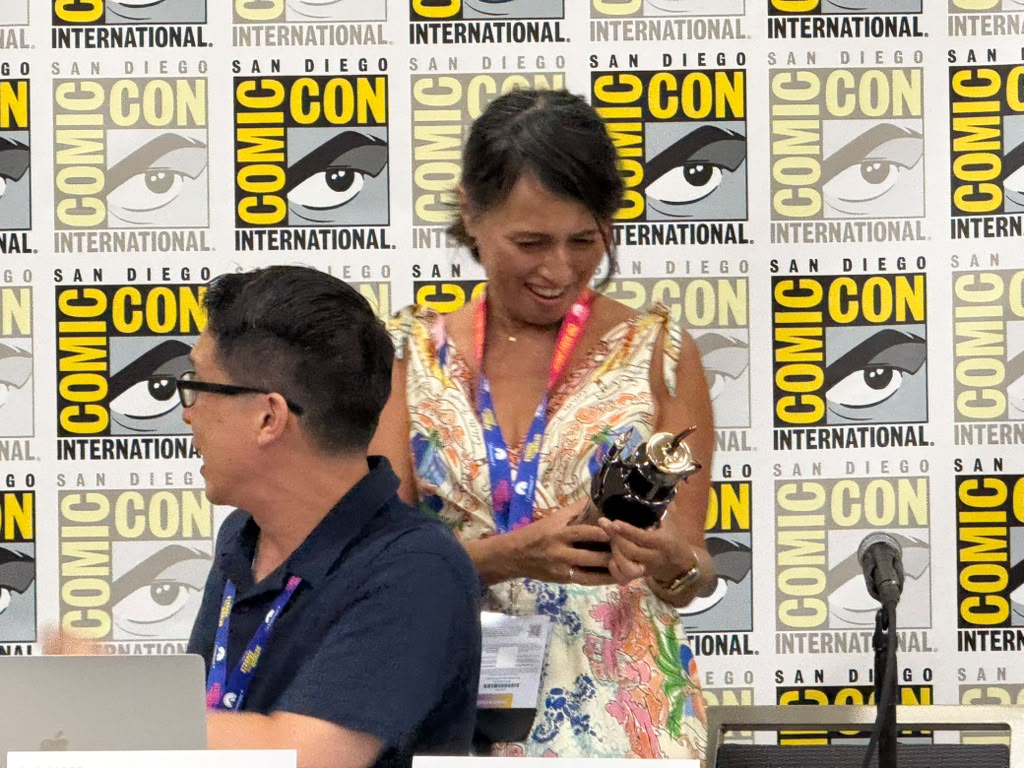
On the difference between picture books and comics, LeUyen Pham said, “For a picture book, the artistic side of you gets to come out. For a graphic novel there is no escaping story.”
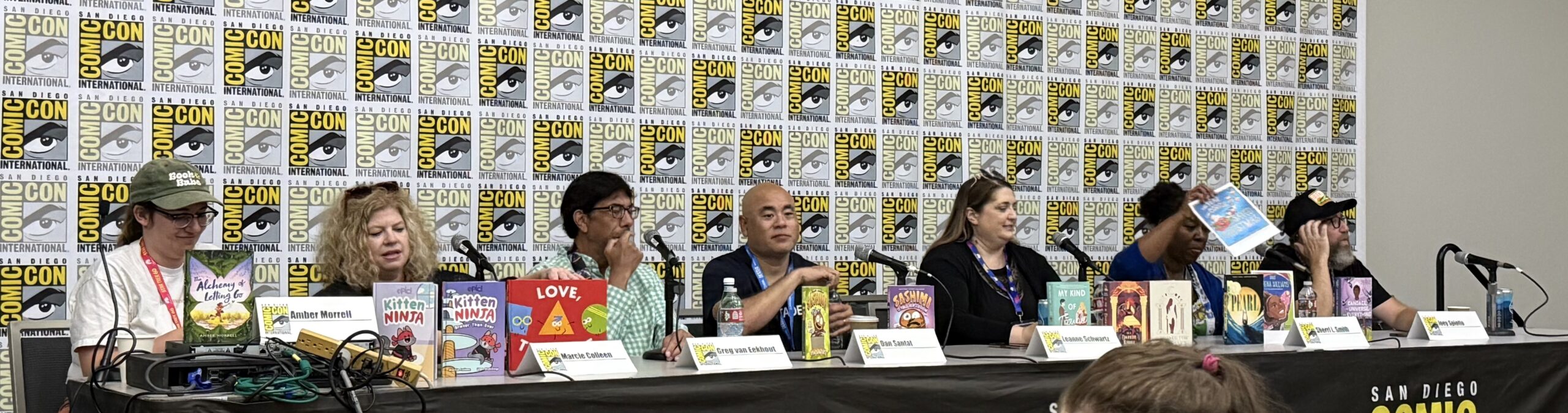
At the “Toddlers to Teens: Writing for Kids” panel, Greg van Eekhout offered the following advice: “Try to come into contact with who you were as a child, and write that.”
Also, shout-out to “Toddlers to Teens” panel moderator Amber Morrell for the best intro to the Q+A portion: “Ask a question that one of us can answer and ends in a question mark. If you have a comment, there are signings — bring us your comments there.”
7: The costumes!
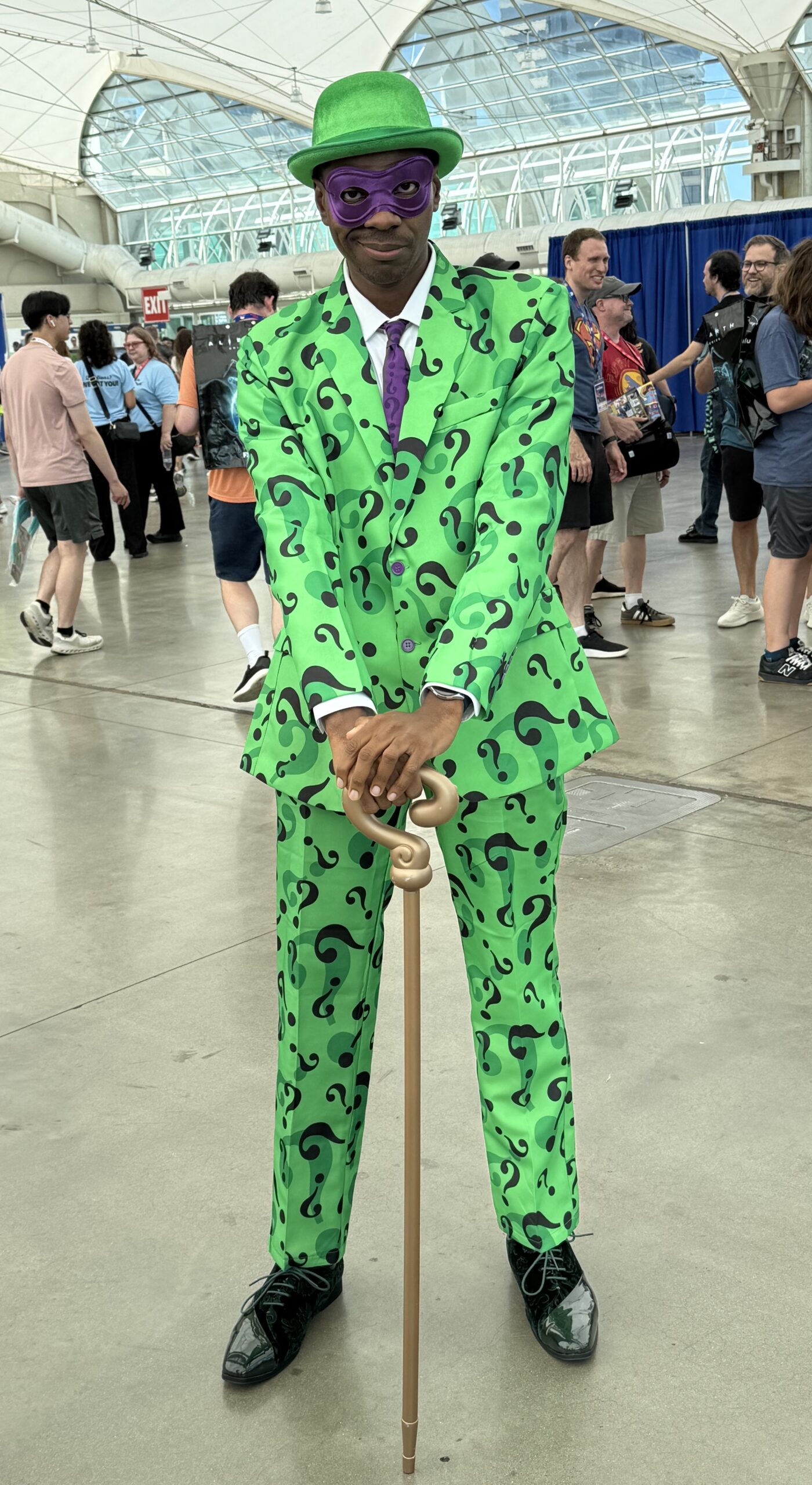
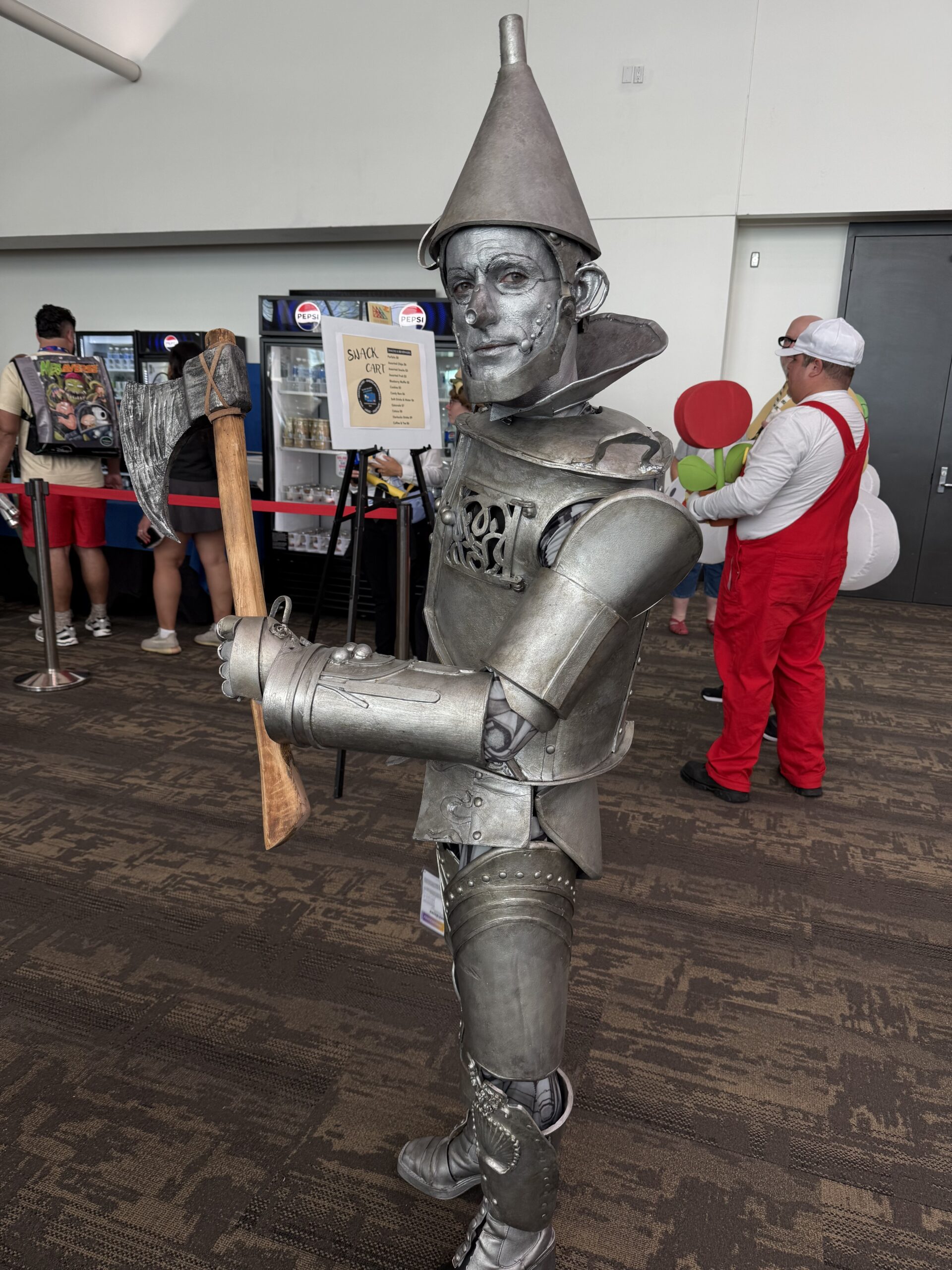
You could spend the entire con just photographing the cool, creative costumes. I did not do that. But here are a few that I did manage to photo.
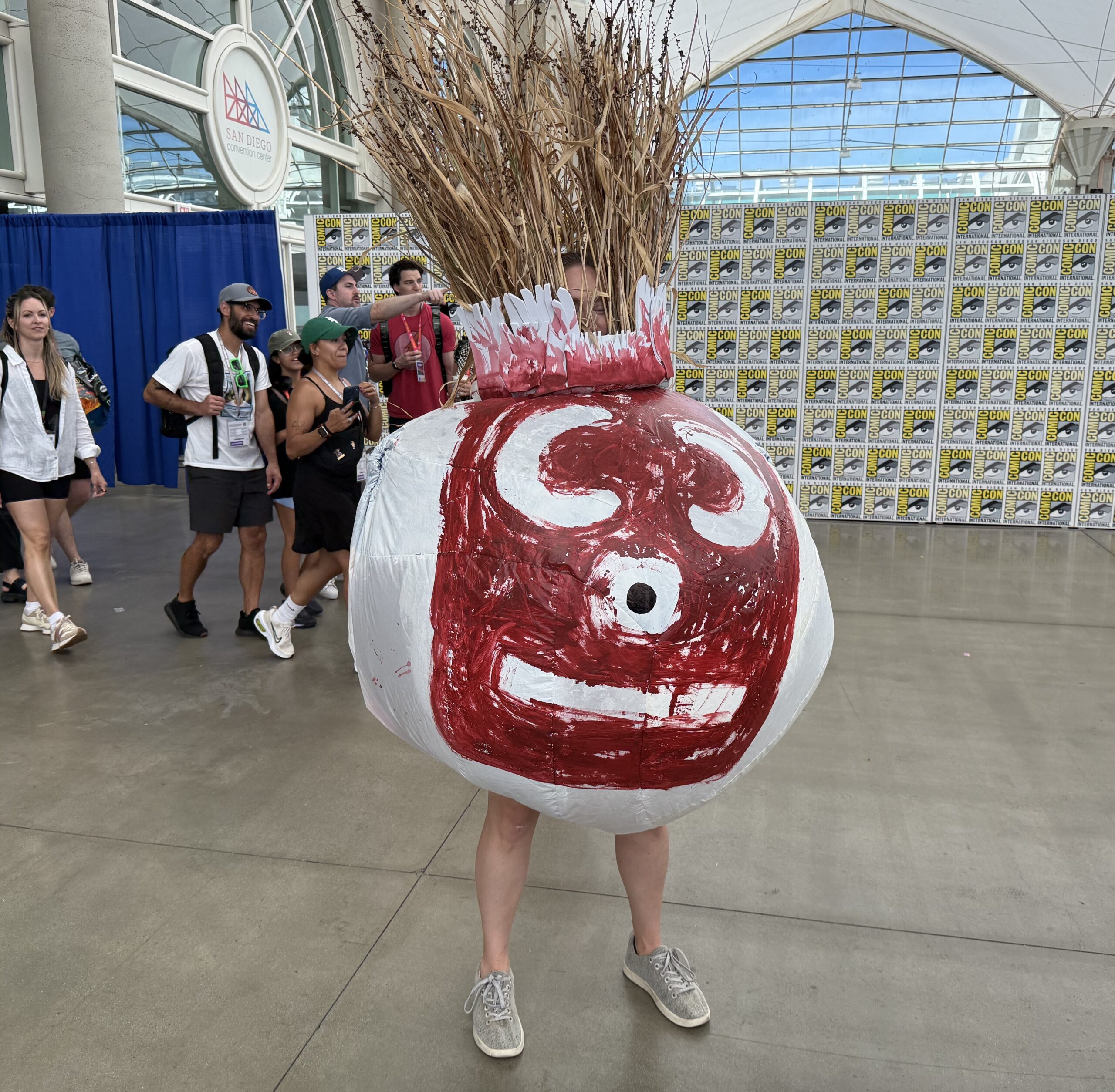
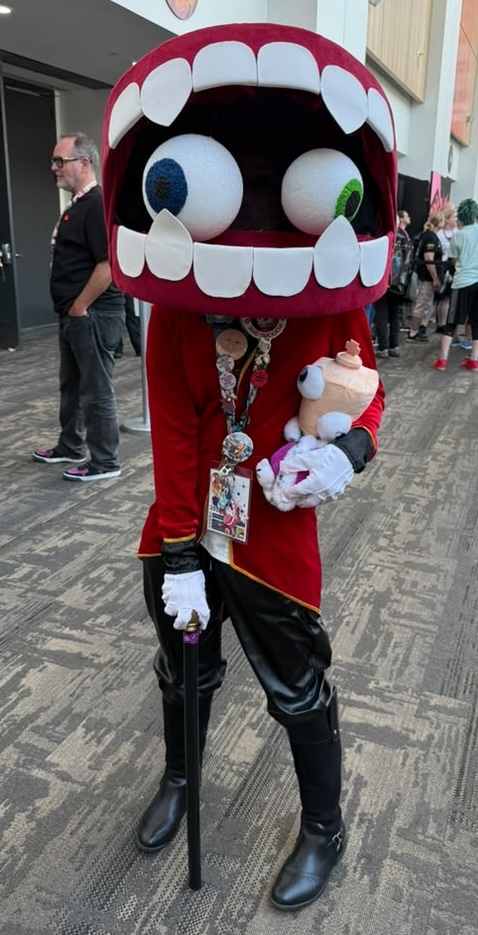
8: Learning about cool books ‘n’ buying ’em.
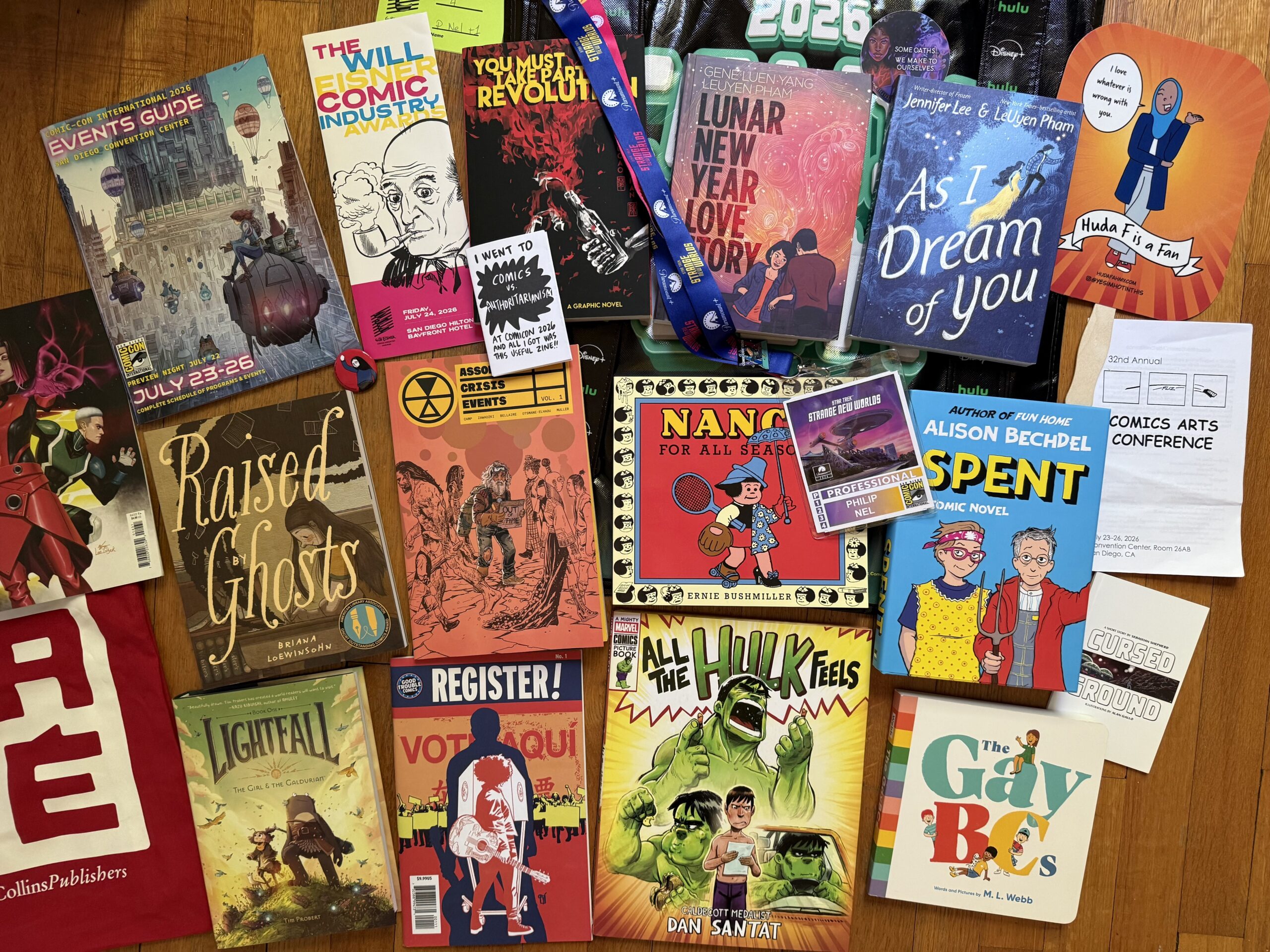
Just a few new-to-me books I want to highlight: Dan Santat’s All the Hulk Feels (2025); Jennifer Lee and LeUyen Pham’s As I Dream of You (2026), Briana Loewinsohn’s Raised by Ghosts (2025); Melissa Chan and Badiucao’s You Must Take Part in Revolution (2025); Deniz Camp, Eric Zawadzki, Jordie Bellaire and Hassan Otsmane-Elhaou’s Assorted Crisis Events Vol. 1 (2026).
9: Kate McKinnon!
We learned at our first Comic-Con (2013!) that we’re never going to get into Hall H. And so we don’t try for the Big Celebrity / Film / TV panels. We focus on creators.
Which is how we got to see Kate McKinnon and her sister Emily Lynne, the sole guests on a non-Hall H panel, where they spoke of the second season of their co-created podcast Heads Will Roll — out now! As they entered, they expressed genuine surprise and delight that so many people would turn up to see them.
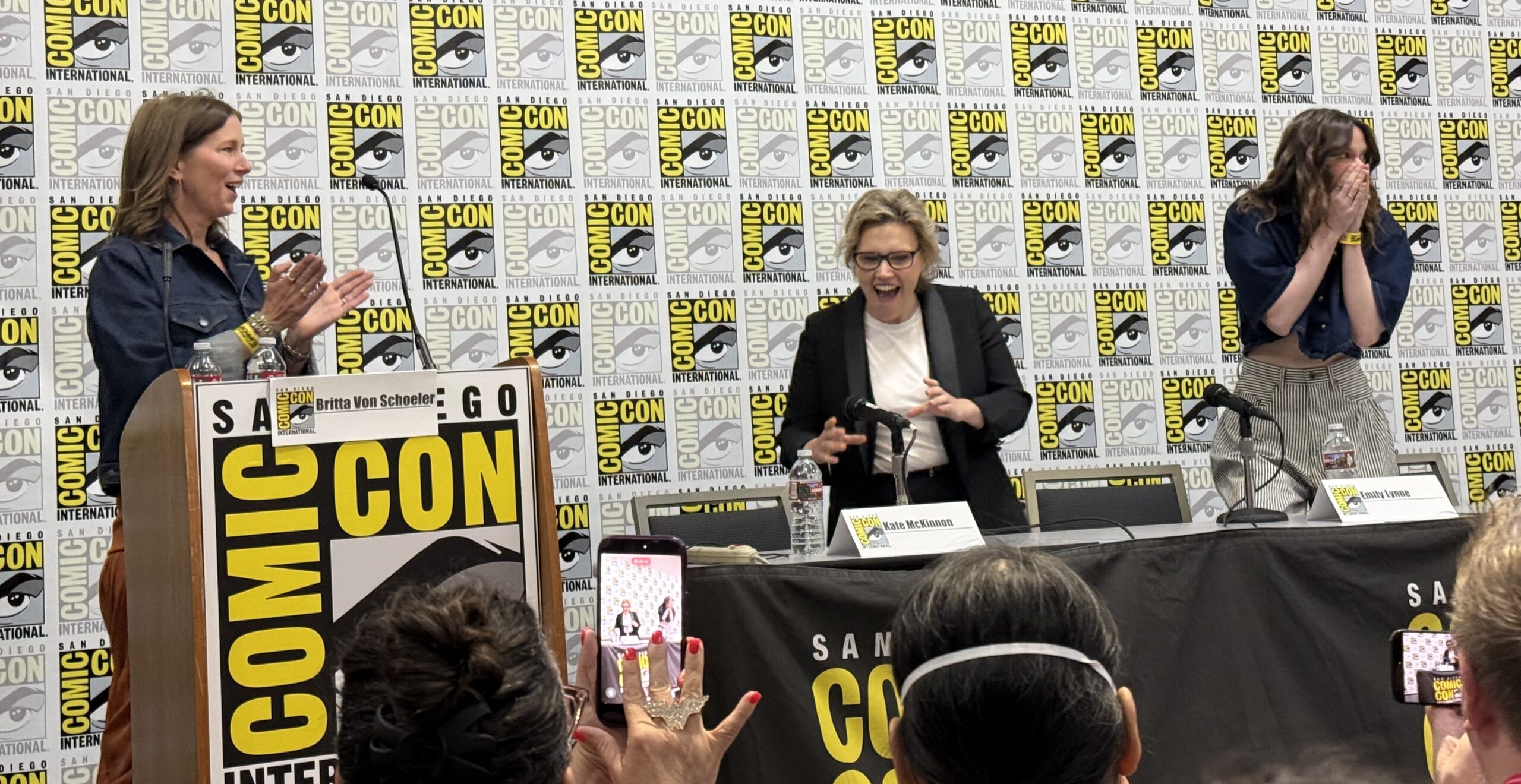
We never listened to the first season of Heads Will Roll, but we have decided to give it a go. (McKinnon and her sister both co-star in it and co-wrote it. Also, Richard Kind is in it!) In addition to being kind of wild to be just a few feet (we were in the third row, so maybe a few meters?) away from Kate McKinnon, she is as dynamic and funny in person as on the screen.
At one point, referencing waking up and going straight into co-writing, McKinnon joked, “Don’t shower. Why are we wasting water? The data centers need it.”
Also, her big personality (or big when performing) makes her seem taller than she is. When she entered the room, I realized she was maybe 5′ 2″ or 5′ 3″.
10: Just being invited.
As noted in my Eisners post (including my un-used acceptance speech), it’s an honor just to be nominated and invited. Truly!
And, you know, attending Comic Con in 2026 may feel a bit dystopian, but what doesn’t feel dystopian these days? It’s good to be among the artists, writers, and other creative folks dreaming of parallel worlds, resonant stories, and other futures. As Octavia Butler wrote of her own speculative fiction, “the very act of trying to look ahead to discern possibilities and offer warnings is in itself an act of hope.” In the same essay, Butler says the following to a young man seeking more answers than her fiction is able to provide: “there’s no single answer that will solve all of our future problems. There’s no magic bullet. Instead there are thousands of answers—at least. You can be one of them if you choose to be.”
Comic-Con: dispatches from previous years
- 2017
- 2016
- 2015: I didn’t attend.
- 2014: day 1, day 2, day 3, day 4, day 5
- 2013: day 1, day 2, day 3, day 4, day 5
And the Eisners post from 2026 (this year).
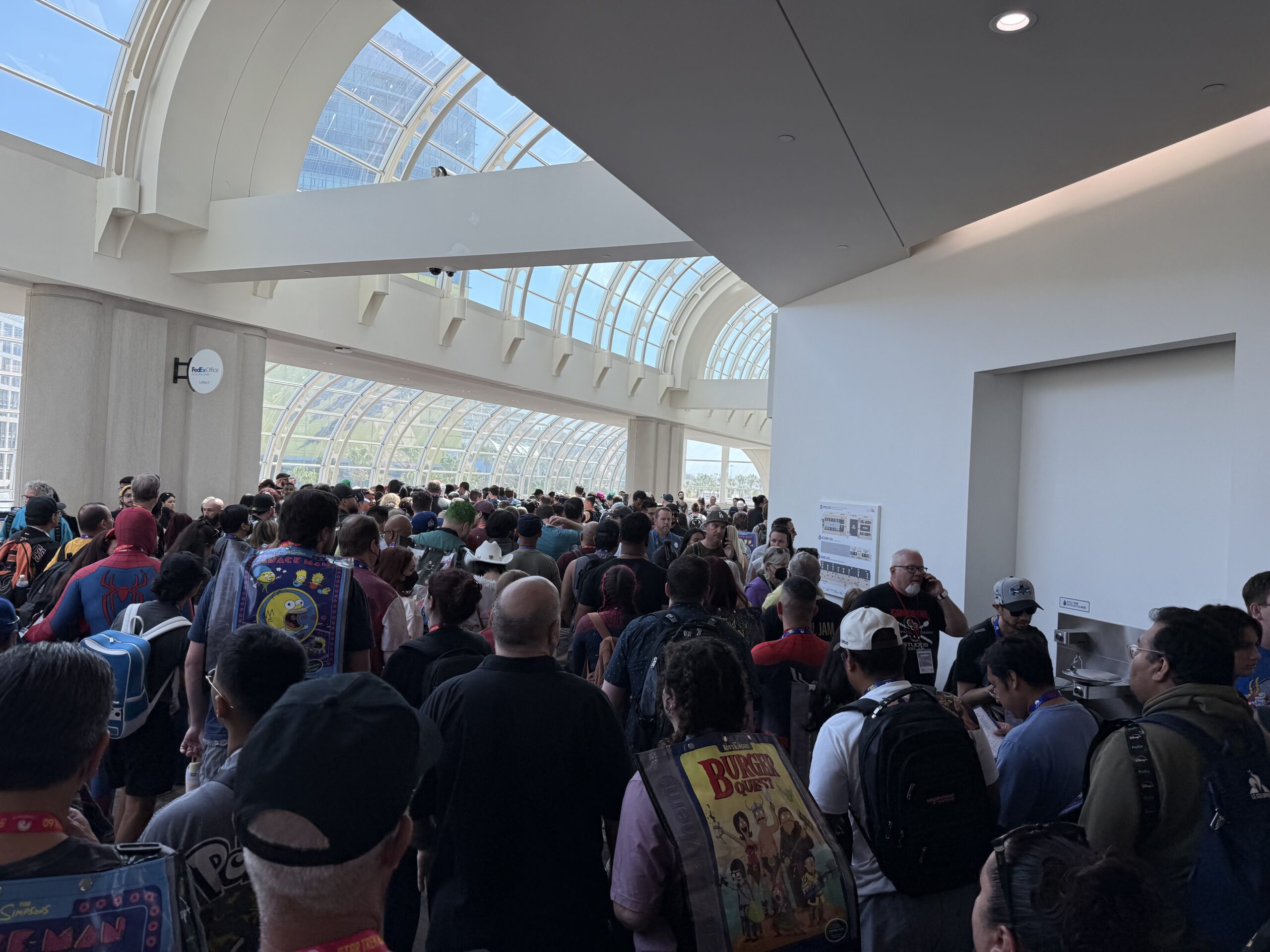
“The future belongs to crowds.”
— Don DeLillo, Mao II (1991)